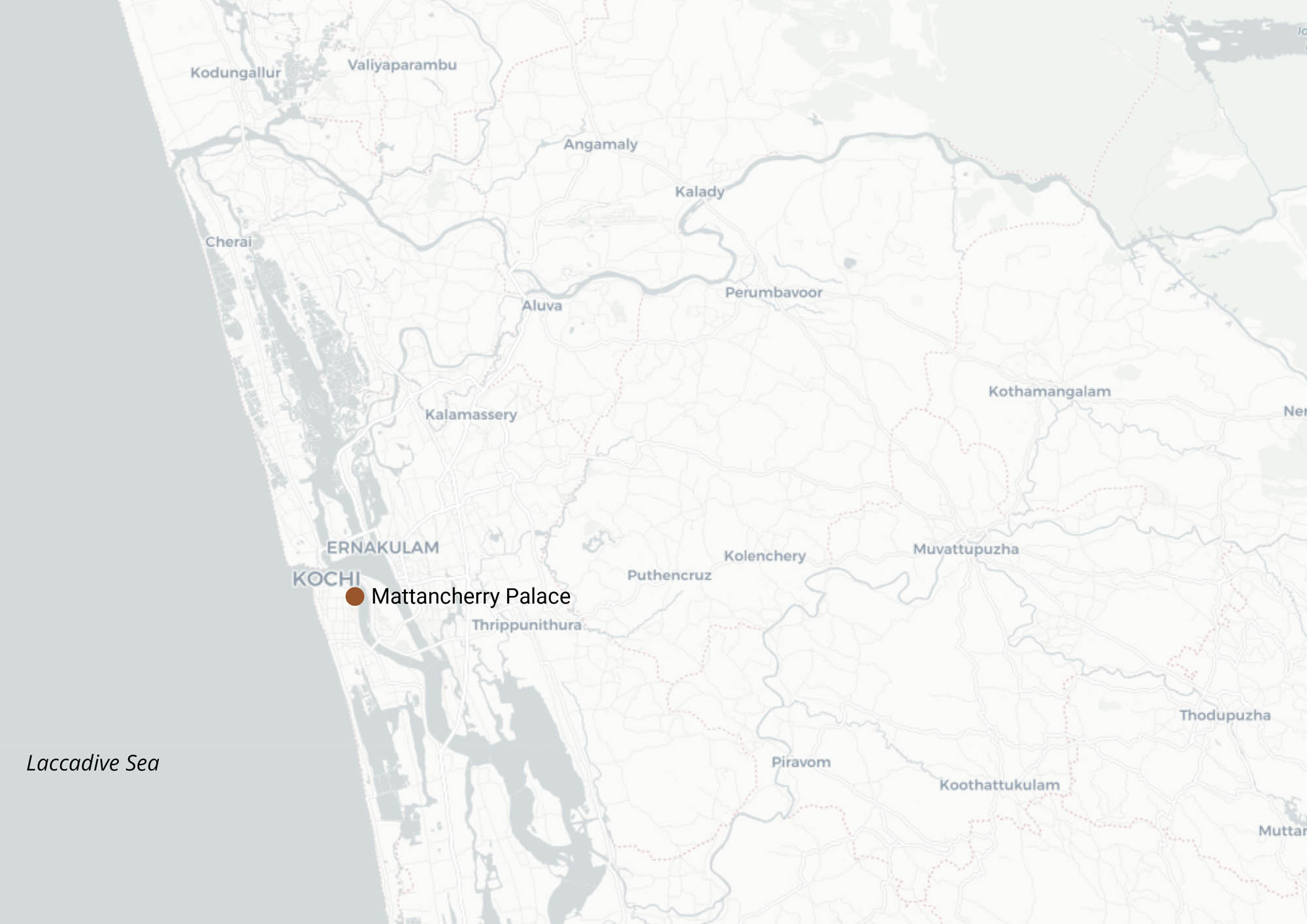
In Kochi, historic mural paintings can be found on the walls of several religious and built heritage sites. Mattancherry Palace, a heritage monument centrally protected by the Archaeological Survey of India (ASI) (Source: List of Centrally Protected Monuments / Sites under the jurisdiction of Kerala (Thrissur Circle)), houses impressive murals, including those depicting the Ramayana. There are also murals on the outer walls of the sanctum sanctorum at temples such as the Pazhoor Perumthrikovil Mahadeva temple, the Thirunayathode Sivanararayana temple, and the Piravom temple, all protected by the State Archaeology Department of the Government of Kerala (Source: Protected Monuments, Department of Department of Archaeology ).
However, there are several other murals not listed as heritage by either the ASI or Kerala’s State Archaeology Department, at temples such as the Cheranalloor Bhagavati temple, Ramamangalam temple, and Paliyam Krishna temple, and at churches such as St. Mary’s Jacobite church and St Mary's Catholic church, to name a few.
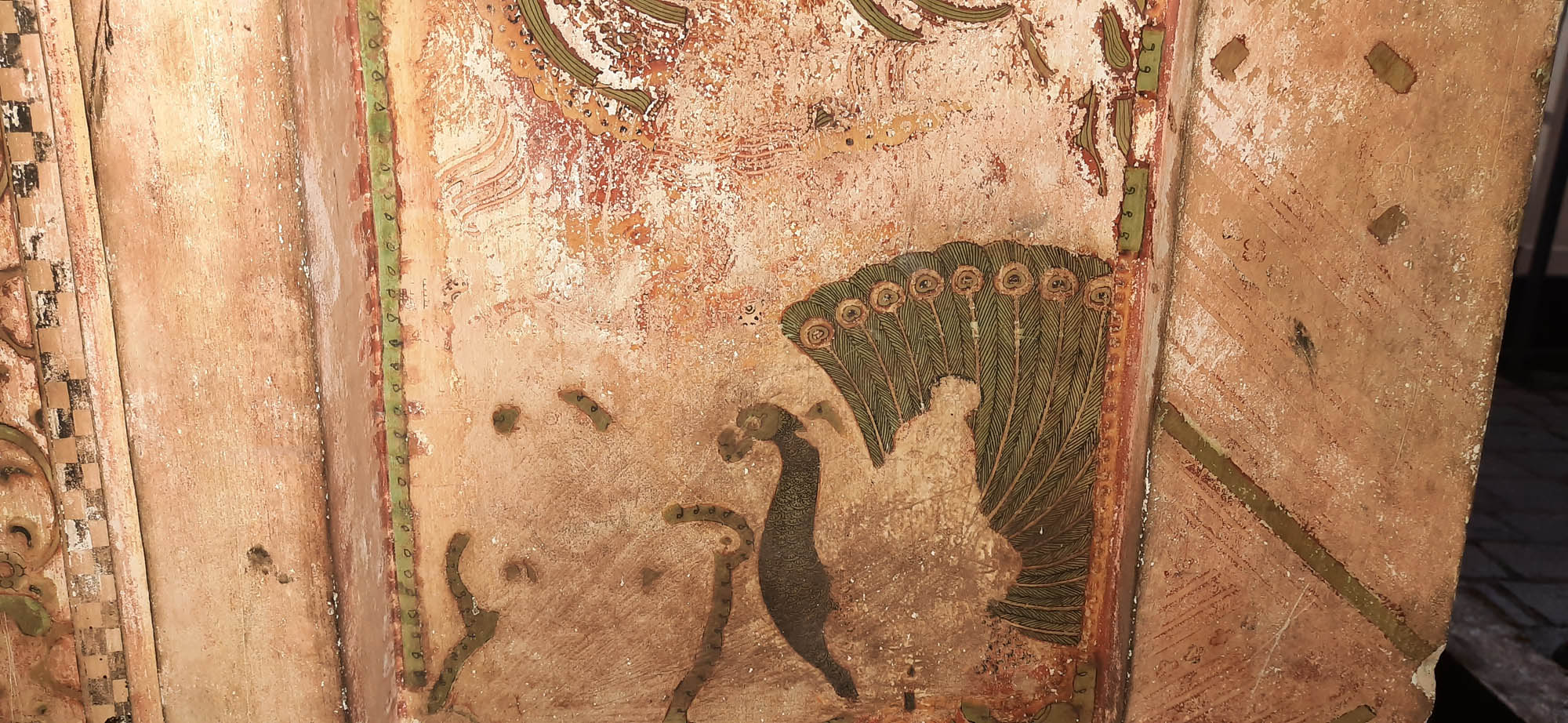
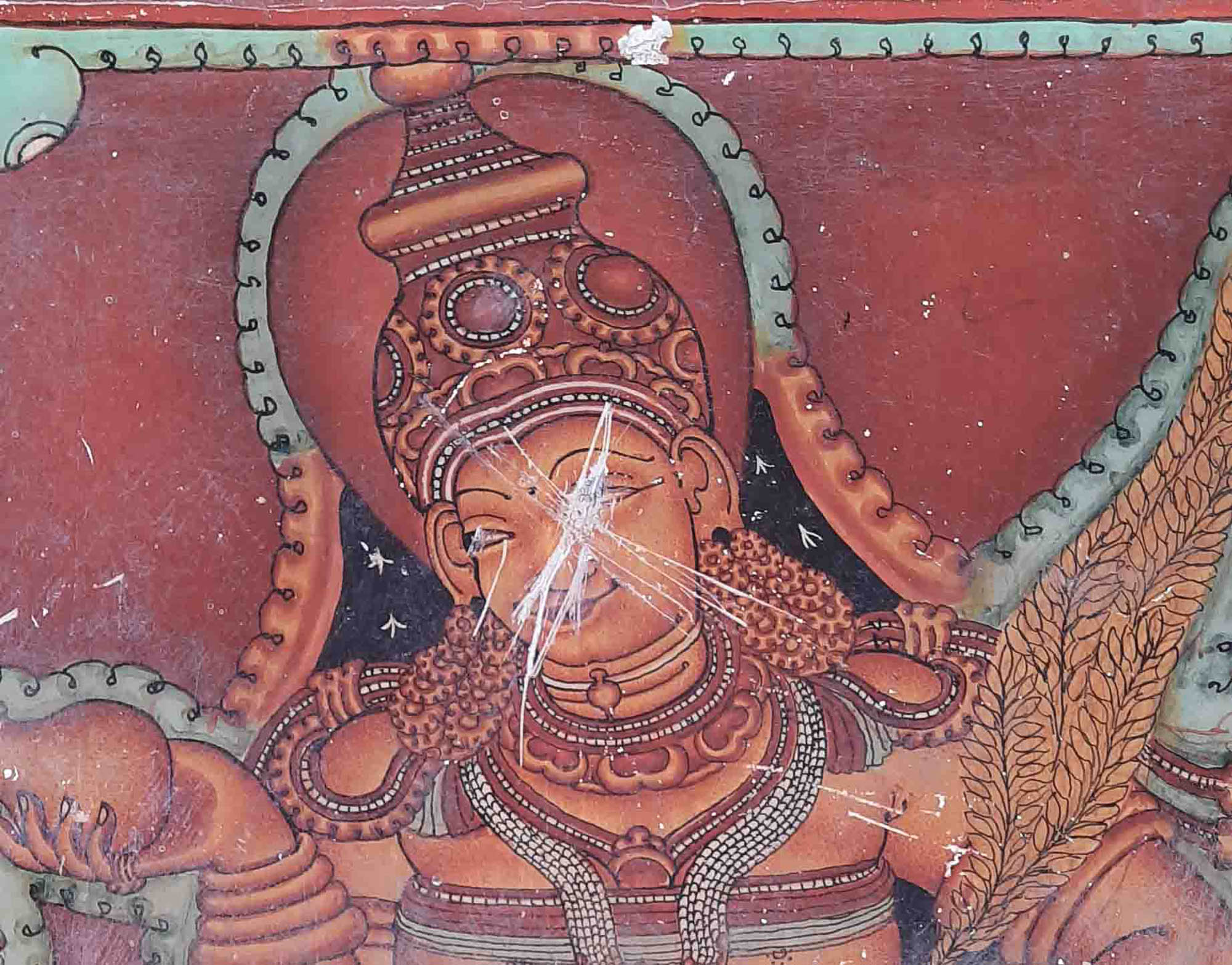
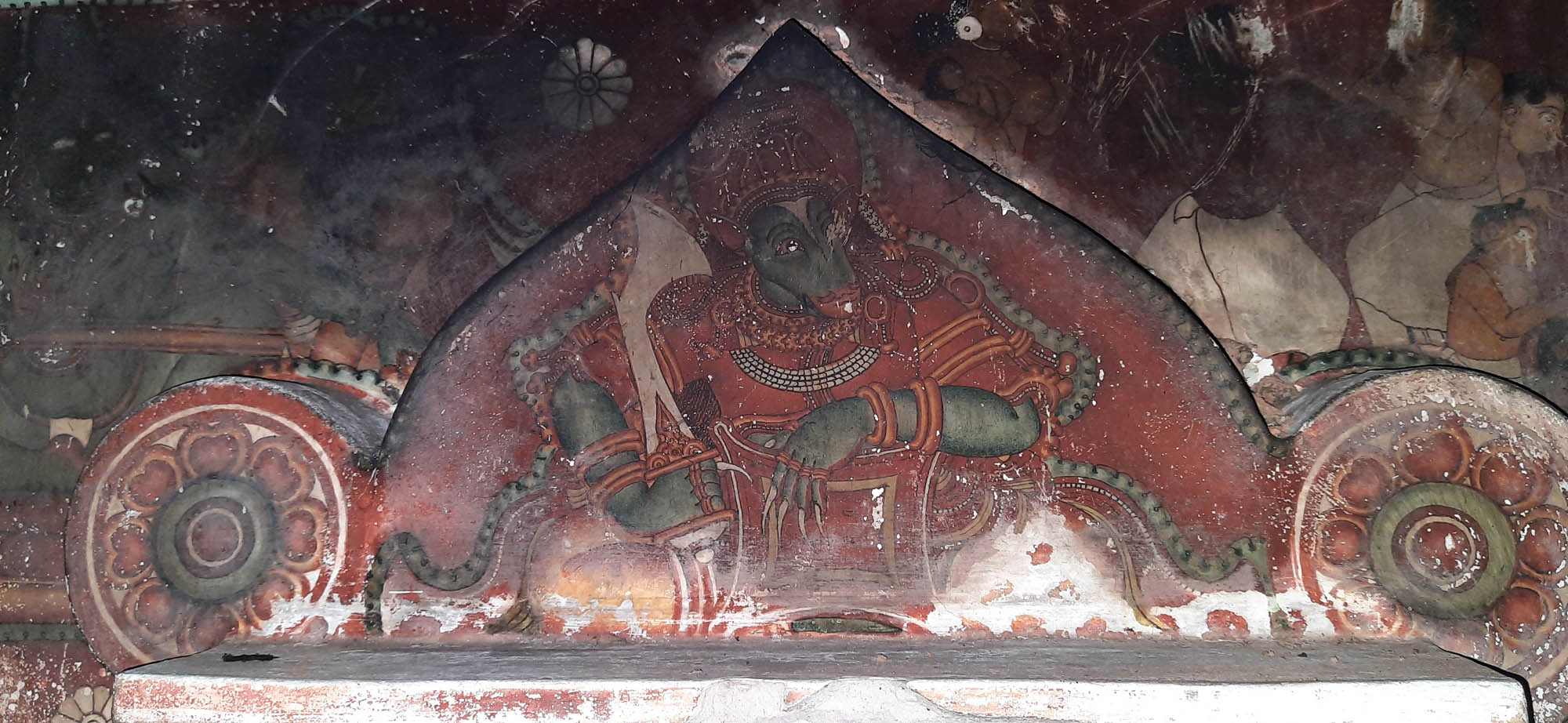
Kadavil Thrikkovil at Udayamperoor, a small temple with Lord Krishna as its main deity, is one such location with murals dating back to 1782, though it is not formally listed as a heritage site.
Mattancherry Palace Murals
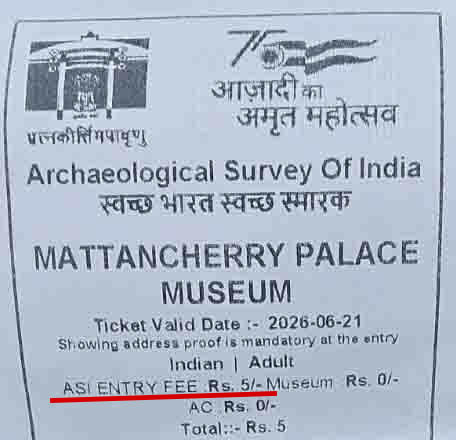
Mattancherry Palace, also known as the Dutch Palace, was built around AD 1555. The palace contains some of Kerala’s oldest, largest, and best-preserved murals.The entry fee to this museum is still just ₹ 5 !
Ramayana hall
A highlight of the palace is the Ramayana hall, the king’s bedroom, with murals depicting iconic passages from the Ramayana.
Rainer Halama, Mattancherry Palace-16-17th Century mural paintings-Scenes from the Ramayana-WUS09250, resized the image, added Interactivity, etc. by Vimal Krishnan R, CC BY-SA 4.0
Rama avatar
Daśaratha's Putrakāmeṣṭi yajña granted him four illustrious sons: Rāma, Lakṣmaṇa, Bharata, and Śatrughna, as depicted in this mural.
Rainer Halama, Mattancherry Palace-16-17th Century mural paintings-Scenes from the Ramayana-WUS09250, resized the image, added Interactivity, etc. by Vimal Krishnan R, CC BY-SA 4.0
Murals protected by the Department of Archaeology, Government of Kerala
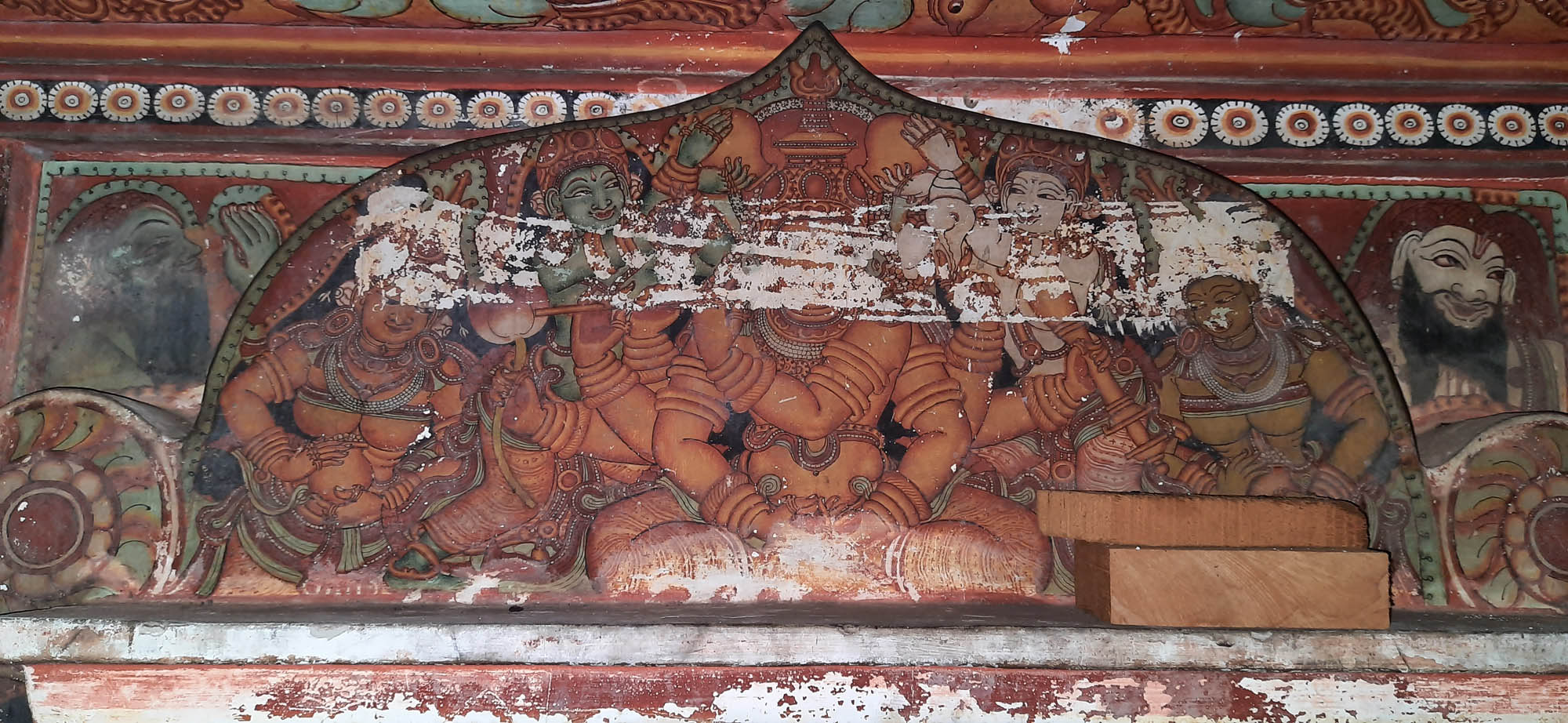
The murals protected by the state's archaeology department are also impressive...
like this Ganesha at Siva Narayana Temple, Thirunayathode.
Murals not listed as heritage
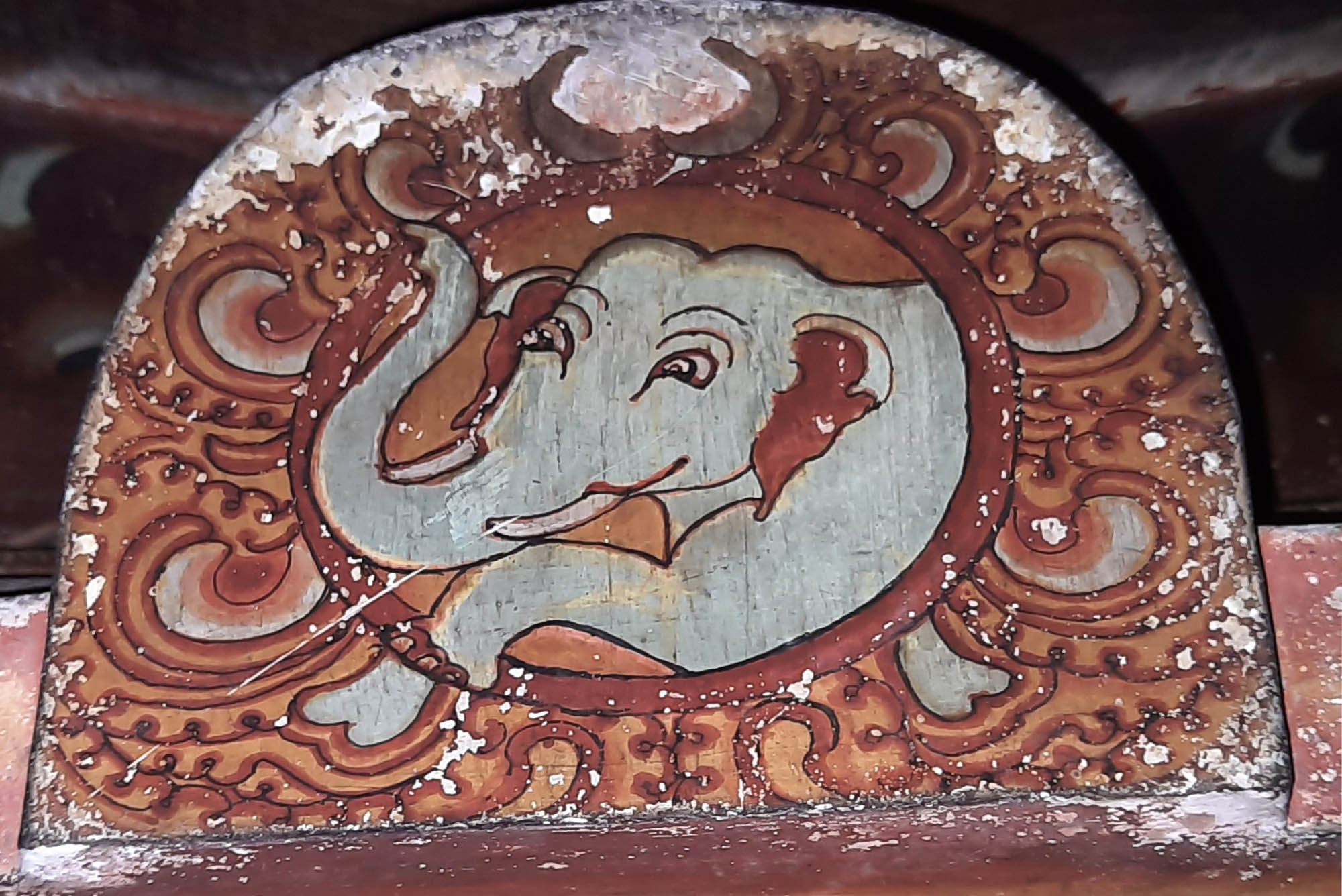
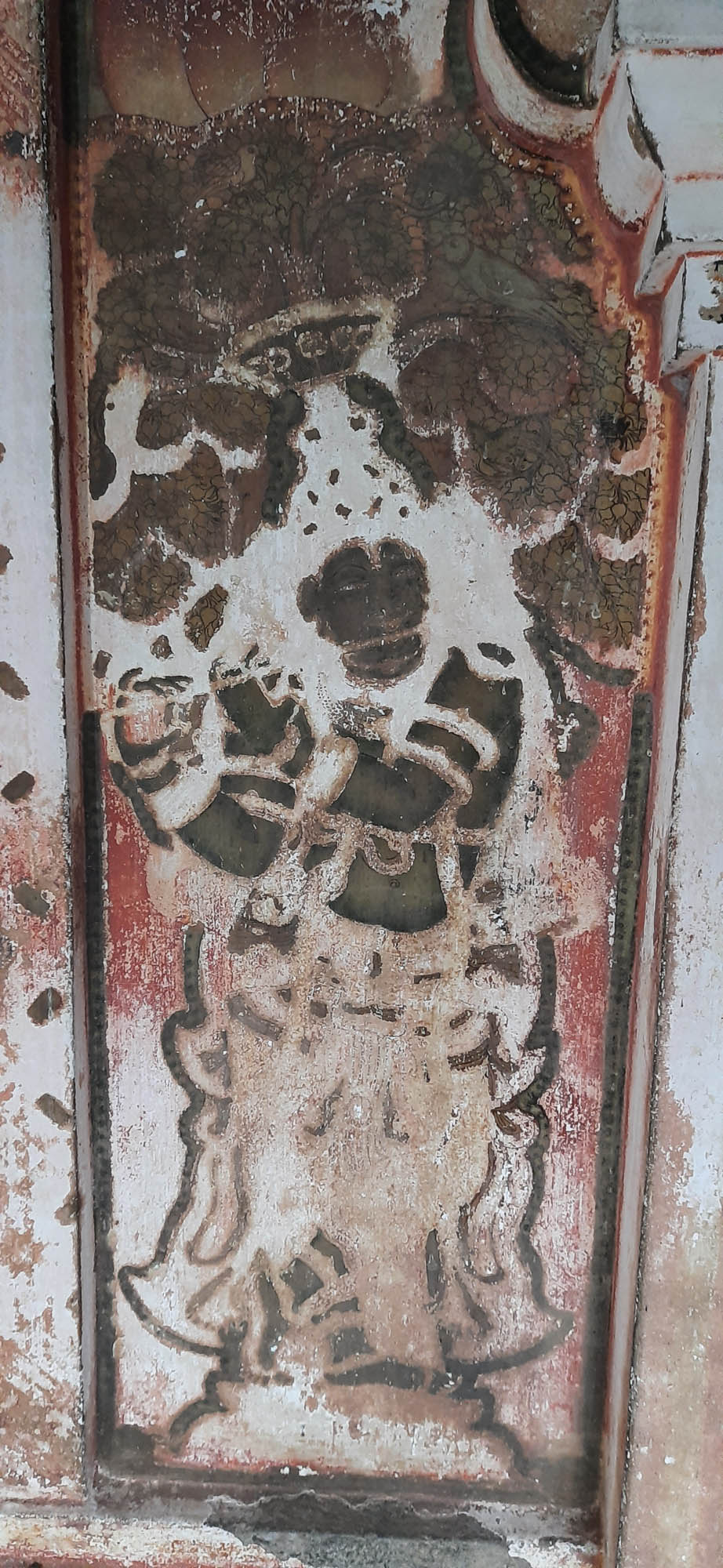
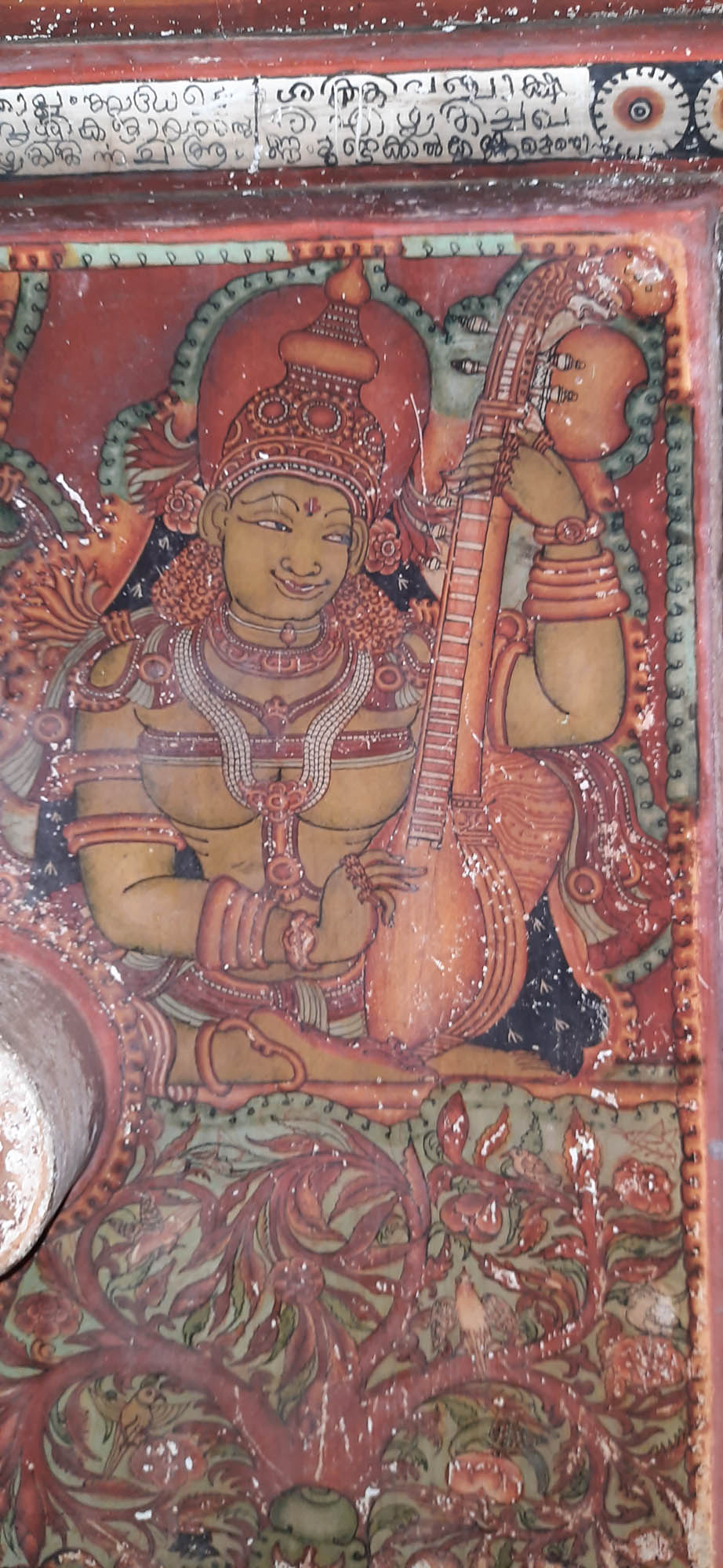
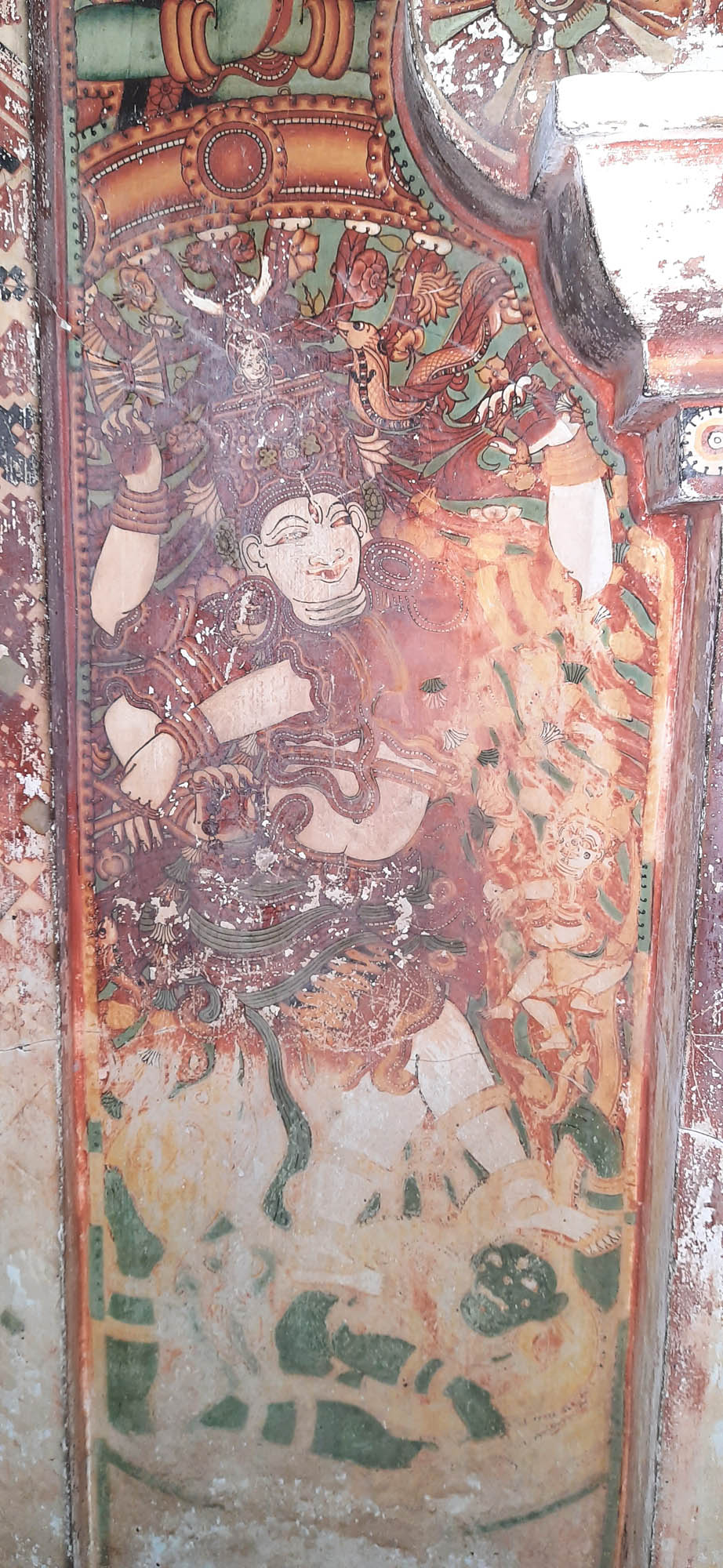
There are also murals, at temples such as Kadavil Thrikkovil that are not listed as heritage by the Central ASI or the state's archaeology department.
Proximity to protected murals
It is surprising that a temple like Kadavil Thrikkovil, with unlisted murals, is in close proximity to centre- and state-protected murals. A distance of 12 km separates Kadavil Thrikkovil from Mattancherry Palace, protected by the ASI, and the state-protected Pazhoor Perumthrikovil Mahadeva temple.
Etched in our minds...
This inscription at Kadavil Thrikkovil, records the year 1782, when the murals were completed.